GreenGod · Brewing ingredients · Ecommerce SEO
Ecommerce SEO for a brewing ingredients retailer
Ecommerce SEO for GreenGod, a brewing ingredients retailer in Moscow. Category structure and product information supported 25% growth in search traffic.
- Services
- Ecommerce SEO
- Region
- Moscow
- Project period
- 8 months
The brief
Grow GreenGod’s search traffic by connecting precise ingredient demand with a well-structured specialist catalogue.
Results at a glance
- Search traffic
- +25%
Relative change: before = 1
- Project period
- 8 months
- Region
- Moscow
GreenGod · Brewing ingredients
The challenge
The brewing ingredients store served customers whose searches ranged from a broad ingredient category to a specific product with precise characteristics. The catalogue needed to serve experienced buyers without making selection difficult for people learning the terminology. SEO therefore involved more than adding text to category pages. We matched categories and product details to the ingredients buyers searched for, explained the differences between products and made ordering information easy to find.
Where we started
We began by separating searches for ingredient families, brands and specific product properties. We compared that demand with the catalogue and looked for selections whose names concealed useful differences. Product pages were then reviewed for consistency of specifications, package information and related links. This established which improvements belonged in navigation, which required richer product data and which could be answered through a focused explanation on the category page.
Problems we solved
Informational searches differed from buying intent
Before
Recipe research and ingredient shopping used similar terminology. The catalogue needed to focus on searches that matched products actually available.
What we changed
We separated informational interest from searches from ingredient buyers and mapped product groups and specific varieties to their own destinations.
Small product differences mattered to the recipe
Before
Generic descriptions made it difficult to compare properties, producer information and pack size, particularly when choosing a replacement ingredient.
What we changed
We standardised the presentation of product characteristics and packaging, keeping the catalogue useful for both first-time selection and repeat purchasing.
What we did
Built categories around the ingredients buyers searched for
We structured category pages around recognisable ingredient groups and the distinctions customers used when selecting them. Brand demand remained connected to the relevant products, while characteristic-based selections were considered separately from basic navigation. Headings and internal links clarified the role of each section. This gave the catalogue a more consistent route from a broad search to a manageable selection of products with relevant properties.
Made product differences easier to compare
We standardised the presentation of the specifications supplied for each ingredient. Package size, product identity and relevant properties were separated from general promotional descriptions. Comparable products followed a similar order of information, reducing the need to search through free-form text. Where data required clarification, the content retained a route to asking the store rather than filling the gap with an unsupported claim about suitability.
Product information connected the ingredient’s identity and properties with the exact packaging option. This made the catalogue more useful than a set of interchangeable category descriptions.
Added guidance to help buyers choose ingredients
Category content explained the distinctions needed to navigate the assortment without becoming an unrelated brewing guide. We connected short explanations with the products they described and placed ordering conditions within the buying journey. Terminology was used consistently across headings, filters and descriptions. This allowed a less experienced visitor to understand the catalogue while preserving the exact product language familiar to returning specialist customers.
Improved catalogue structure and indexing
We reviewed duplicate URLs, category titles, internal links and the way catalogue controls created alternative page states. Important product groups remained connected through stable navigation. Meta descriptions reflected the assortment rather than repeating the same store message everywhere. Checks after changes focused on the relationship between category queries and their intended pages, keeping technical work connected to the actual products customers were trying to find.
Key decisions
The difficult part was preserving technical specificity without allowing the catalogue to become understandable only to an expert. An ingredient could be described by its familiar product name, a general category or a property important to a particular buyer. We handled these as related entry points rather than interchangeable labels. Navigation separated the main ingredient groups, product pages retained exact specifications and category explanations connected the two. This prevented simplification from erasing useful detail and kept specialist terminology from becoming a barrier to finding the appropriate section.
What changed
The project gave the store a clearer connection between ingredient searches, catalogue sections and product information. Customers could progress from a broad category to a more precise selection with fewer gaps in the explanation. For ongoing SEO, the store gained a consistent framework in which new products and category improvements could be developed without losing the catalogue's technical accuracy.
Results in detail
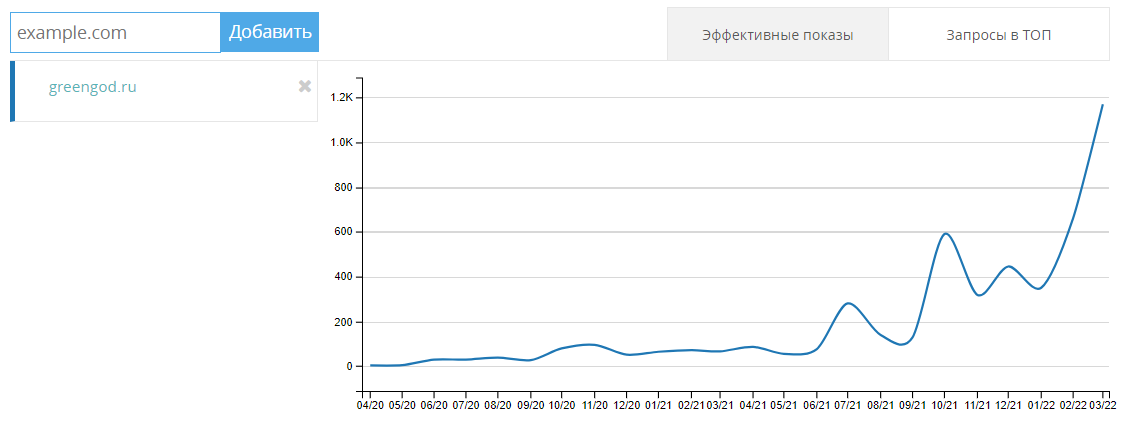
Search performance
Effective impressions · GreenGod
04.2020 — 03.2022
 Explore the chart