Ankebio · Dietary supplements · Ecommerce SEO
Ecommerce SEO for a dietary supplements store
Ecommerce SEO for Ankebio’s dietary supplements shop in Moscow: category structure and product content. Search traffic grew fourfold over six months.
- Services
- Ecommerce SEO
- Region
- Moscow
- Project period
- 6 months
The brief
Grow Ankebio’s dietary-supplement catalogue through relevant commercial searches and clearer product information for customers in Moscow.
Results at a glance
- Search traffic
- ×4
- Keywords in the top 10
- >80%
Relative change: before = 1
Share of tracked keywords
- Project period
- 6 months
- Region
- Moscow
Ankebio · Dietary supplements
The challenge
The store had an assortment that could attract many different searches, but those entry points needed a coherent catalogue behind them. Some buyers knew the product or brand they wanted; others compared product types, composition and package options. The website had to help both groups find relevant items and understand the offer. We approached the project through demand mapping, category development and clearer product information, keeping commercial content focused on verifiable characteristics rather than broad promises about health outcomes.
Where we started
We began by separating brand, product-category and attribute searches, then mapped them to the catalogue. This showed where the store needed a useful category explanation, where product pages required clearer information and where several URLs served the same purpose. We also reviewed how a visitor moved between related items. The starting plan connected the website structure with filtering and product comparison, giving the technical and editorial work a shared direction.
Problems we solved
General information competed with buying intent
Before
Visitors researching ingredients and buyers looking for a specific product required different pages. Treating them alike diluted the catalogue’s commercial purpose.
What we changed
We separated informational topics from product demand and matched buying queries to categories or the exact product page.
Product comparison needed factual detail
Before
A customer had to compare composition, product form and pack size. Generic descriptions did not explain the differences between offers.
What we changed
We structured manufacturer information consistently and connected product details with ordering and delivery terms, keeping the focus on identifiable product characteristics.
What we did
Matched supplement searches to categories and products
We grouped commercial demand according to the level of choice involved. Broad product-type searches led to categories, brand queries to relevant ranges and precise requests to suitable items. This kept the catalogue from relying on one general page for unrelated needs. Each landing page received a clearer purpose, and internal links helped buyers move towards a more specific option without losing the context of the original search.
Made specifications consistent across products
We brought product descriptions into a more consistent information model. Composition, format, package size and other relevant specifications were placed where they supported comparison. Variant differences were made explicit rather than left to the buyer to infer from a photograph. The editorial approach distinguished factual product information from unsupported outcome claims, making product pages more useful for an informed purchase and easier to update as the range changed.
Category, product name, composition and packaging were checked together so that the search result and the product page described the same offer.
Resolved filter and duplicate-page issues
We reviewed how filters and product variants generated pages, checking where a useful selection could become unnecessary duplication. Search-focused landing pages were distinguished from temporary combinations intended mainly for browsing. Headings, metadata and internal links were aligned with that distinction. The technical work supported a cleaner relationship between the catalogue's structure and the pages prioritised for SEO, while preserving the filtering tools customers needed to explore the range.
Made ordering terms clear alongside product details
We treated availability, delivery and the order route as part of the product page rather than secondary information elsewhere on the site. Mobile presentation was reviewed so specifications and actions remained usable together. Relevant categories and related items were connected through internal links. Later page reviews combined search observations with the structure of the catalogue, helping identify where another explanation or a clearer transition was needed.
Key decisions
The difficult part was managing a broad range without creating either vague categories or an excessive number of nearly identical pages. Product names and package variants could make the catalogue look more diverse than the underlying search need. We resolved this by separating meaningful category demand from attributes used mainly for comparison. A consistent specification model preserved the detail buyers needed, while a more deliberate landing-page structure kept the search work focused on pages with an independent purpose and useful content.
What changed
We matched the catalogue to the products customers searched for and made product listings easier to compare. Buyers could move from a category to a specific item and find the details needed to order. The same category structure and product information format could be used when updating the range.
Results in detail
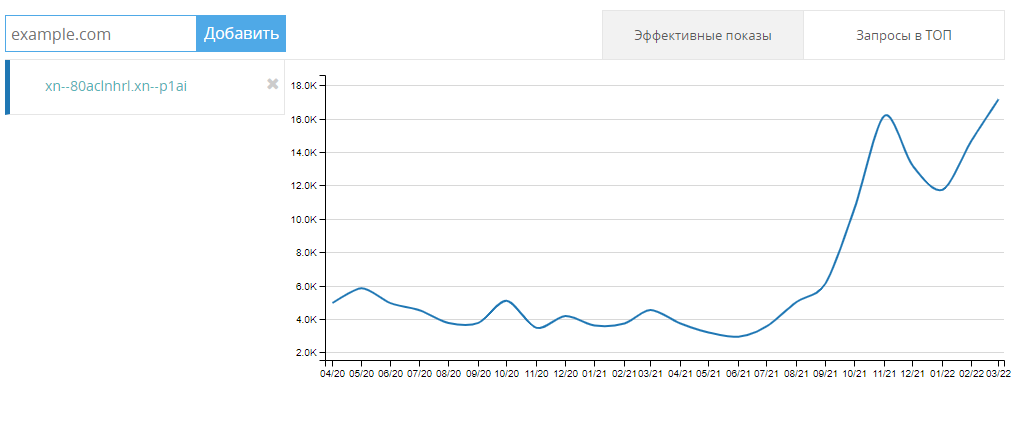
Search performance
Effective impressions · Ankebio
04.2020 — 03.2022
 Explore the chart