Assuta clinic · Healthcare SEO
Healthcare SEO for Assuta clinic
Healthcare SEO for Assuta clinic: patient questions, service pages and technical optimisation. Search traffic and visibility doubled during the project.
- Services
- Healthcare SEO
- Project period
- 8 months

The brief
Increase relevant search visibility for the Assuta medical website and connect topic-specific information with a clear route to the project’s representatives.
Results at a glance
- Search traffic
- ×2
- Search visibility
- ×2
- Keywords in the top 10
- 71%
Relative change: before = 1
Relative change: before = 1
Share of tracked keywords
- Project period
- 8 months
- Ranking snapshot
Assuta clinic
The challenge
The clinic website addressed people making a difficult and highly personal decision. A visitor researching a medical term needed a clear explanation, while someone considering treatment needed information about the service and the next contact step. These intentions could not be handled well by one undifferentiated page. We approached the search work through a more careful information structure, separating educational material from service content and making the relationship between them clear without turning an explanation of a condition into a promise about an individual outcome.
Where we started
We first grouped searches by the question a person was trying to answer: understanding a condition, learning about a procedure or choosing where to seek a consultation. Those groups were matched with the website's pages to identify overlap and missing explanations. We then reviewed the route between informational content and the clinic's service descriptions, prioritising sections where a clearer hierarchy and more precise wording could reduce uncertainty for the reader.
Problems we solved
Brand searches and medical topics needed different pages
Before
Visitors researching the clinic had different questions from those searching a particular medical topic. A general clinic presentation could not serve both equally well.
What we changed
We separated institution information from topic pages, aligned each page with a query group and connected related materials through internal links.
Patients needed a clear route from information to contact
Before
A reader could study a topic without understanding where to clarify booking and contact arrangements or how to contact a representative.
What we changed
We gave medical explanations a clear structure and placed the practical contact route nearby, keeping the content suitable for specialist review.
What we did
Separated patient questions by intent
We assigned different roles to educational pages and service pages. Informational material explained the subject and connected related questions, while service pages described what a visitor needed to know before contacting the clinic. Headings and navigation made those roles more apparent. This reduced unnecessary overlap and gave each query group a clearer destination, while preserving a route for readers whose questions changed as they learned more.
Made complex explanations easier to navigate
We revised the structure of long pages so the reader could distinguish the main subject, related concepts and practical questions. Dense passages were divided into meaningful sections, and important qualifications remained close to the statements they affected. The content approach provided space for source references and specialist review. This made the page easier to examine without suggesting that a general explanation could determine an individual medical decision.
Connected service information with the next step
We worked on the transition from reading about a subject to contacting the clinic. Relevant service information and contact options followed the explanation rather than interrupting it with unrelated messages. The wording clarified that an enquiry began a discussion of the person's situation. Across the important pages, this created a more consistent route and avoided asking visitors to interpret promotional language when they needed practical information.
Checked search relevance at page level
We aligned page titles, headings and internal links with the role of each section. Technical checks concentrated on access to the pages prioritised for SEO and the consistency of their relationships. Search observations were then reviewed by query group and destination, helping identify where the intended page needed further attention. The work kept the medical content structure and the website structure connected as the website developed.
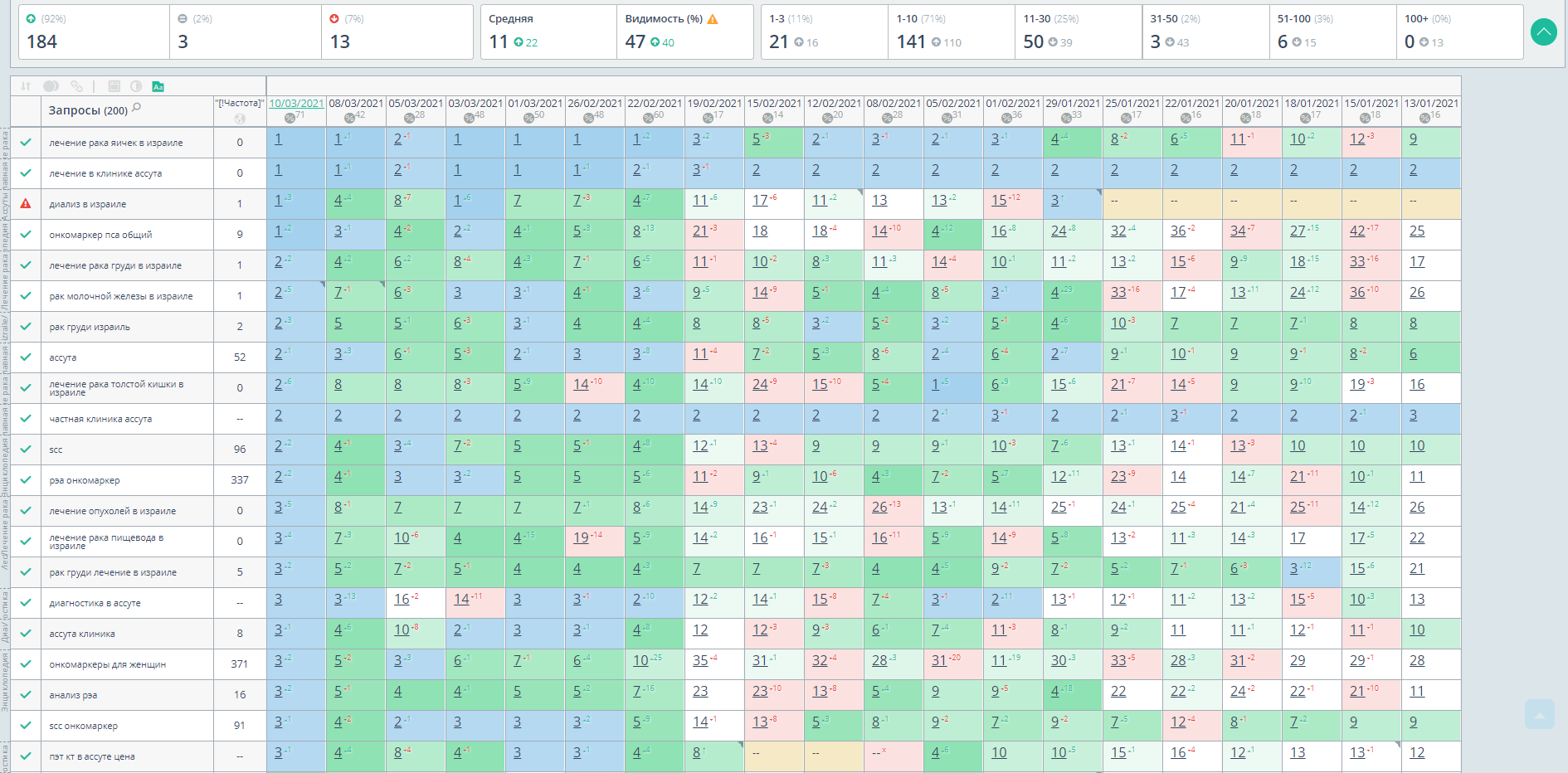
The ranking report dated 10 March 2021 covers 200 tracked queries. The example query shown below moves from position 9 on 13 January to position 1 at the final observation.
Key decisions
The main challenge was making the content specific enough to answer a search without oversimplifying a sensitive subject. A forceful commercial message could undermine trust, while an unstructured medical explanation could leave the reader unsure what to do next. We addressed this through distinct page roles, careful qualification and a visible route to an individual consultation. The structure allowed detailed information to remain accessible while keeping service descriptions focused on the process of contacting the clinic rather than unsupported promises about treatment results.
What changed
The project gave the clinic's content a clearer hierarchy and connected patient questions with relevant service information. Search work became more closely tied to the purpose of each page. The resulting structure supported both careful reading and a practical next step, showing how healthcare SEO depended on the quality of explanation as well as technical accessibility.
Results in detail
Search rankings
Snapshot: 2021-03-10. The report tracks 200 queries. 141 are in the top ten; 21 are in the top three.
View all observations
| Date | Position |
|---|---|
| 9 | |
| 12 | |
| 10 | |
| 11 | |
| 6 | |
| 8 | |
| 4 | |
| 3 | |
| 2 | |
| 3 | |
| 2 | |
| 5 | |
| 3 | |
| 1 | |
| 1 | |
| 1 | |
| 1 | |
| 2 | |
| 1 | |
| 1 |
 Explore the original report
 Search performance
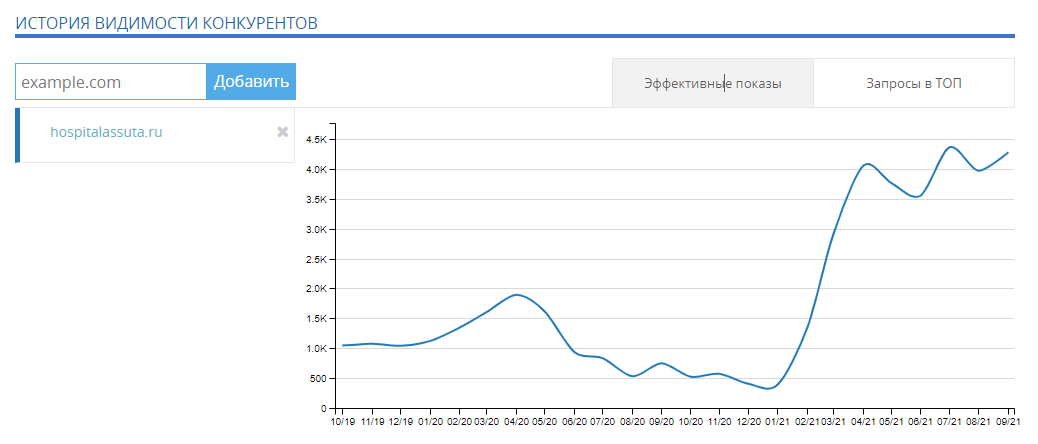
Effective impressions · Assuta
10.2019 — 09.2021
 Explore the chart