Furniture centre · SEO
SEO for a furniture centre
SEO for a furniture centre in the North Caucasus: catalogue structure and product information. Search traffic increased by 70% during the seven-month project.
- Services
- SEO
- Region
- North Caucasus
- Project period
- 7 months
The brief
Grow regional search traffic for the furniture centre and help shoppers move from browsing a furniture category to making a specific enquiry.
Results at a glance
- Search traffic
- +70%
- “Application download” events
- +32.3%
Relative change: before = 1
“Application download” event
- Project period
- 7 months
- Region
- North Caucasus
Furniture centre
The challenge
The furniture centre needed to connect searches with decisions made before visiting a showroom or asking about a product. Customers searched by room, furniture type, size and practical use, while the website presented the product range and purchasing terms. A broad catalogue alone did not guide those journeys. We approached promotion through category structure, useful product information and the relationship between online selection and an offline conversation, keeping each entry page focused on a recognisable customer need.
Where we started
We first compared the catalogue structure with the ways customers described the furniture they wanted. Broad product families were separated from useful attributes and combinations that deserved a focused landing page. We also reviewed what happened after a visitor opened a product: whether dimensions were understandable, purchasing conditions were nearby and the showroom information was easy to reach. These observations established the order of category and page improvements.
Problems we solved
Shoppers needed clear routes into the product range
Before
Visitors searched by room, product type or centre name. A single general presentation could not support all three levels of choice.
What we changed
We separated these search scenarios and linked them to relevant product categories, with consistent navigation between the centre and its assortment.
Interested shoppers needed a clear way to enquire
Before
An image could attract attention without telling a visitor how to clarify dimensions, materials or the conditions of a purchase.
What we changed
We connected the visual presentation with practical product information, regional contacts and enquiry actions. Downloads of the enquiry document were tracked as a separate event.
What we did
Made furniture categories easier to find
We grouped customer searches by furniture type, room and intended use. Category names and headings reflected those distinctions, while overlapping sections were reviewed for duplication. Useful combinations received clear destinations within the catalogue. Internal links connected broader collections with more specific selections, allowing customers to narrow their choice through meaningful differences rather than a sequence of similar category pages.
Added the details needed to compare furniture
We brought practical buying information into product and category pages: dimensions, materials, configuration and details affecting placement or use. The presentation distinguished product characteristics from purchasing conditions, making both easier to find. Where a final choice depended on available variants, the page directed the visitor towards clarification. This supported a more informed enquiry without implying that every displayed option was immediately available in the showroom.
Connected the catalogue with the showroom
We made the route from a product selection to the furniture centre more explicit. Location, contact options and the practical purpose of an enquiry were placed within reach of catalogue visitors. On smaller screens, people could inspect the essential information and ask about the chosen product without navigating through unrelated sections. The website supported both customers ready to visit and those who first needed to clarify a detail.
Improved catalogue navigation and indexing
We reviewed category indexing, page titles, internal links and the URLs produced by catalogue controls. The objective was to keep useful selections discoverable without making every sorting state a separate search destination. Descriptions and headings were aligned with the assortment shown. Subsequent checks followed the important category groups, so technical corrections and content changes could be evaluated within the same commercial part of the catalogue.
The supplied project materials record a 32.3% increase in downloads of the enquiry document. This event was kept distinct from submitted enquiries and sales.
Key decisions
Furniture searches often combine several attributes, but creating a page for every combination would have produced thin or unstable selections. At the same time, hiding all combinations inside filters would have missed useful demand. We resolved this by distinguishing permanent product categories from temporary ways of sorting products. Each category page needed enough relevant products and a clear purpose for shoppers. Information about variants and purchasing conditions then helped bridge the remaining gap between what visitors saw online and what required clarification with the centre.
What changed
The work connected catalogue visibility with a clearer buying journey. Important furniture groups received clear category pages, and product information better supported comparison before a showroom visit. The structure also made further catalogue development more manageable: new selections could be assessed by demand, assortment and usefulness, rather than added simply because another keyword combination existed.
Results in detail
Search performance
Effective impressions
04.2020 — 03.2022
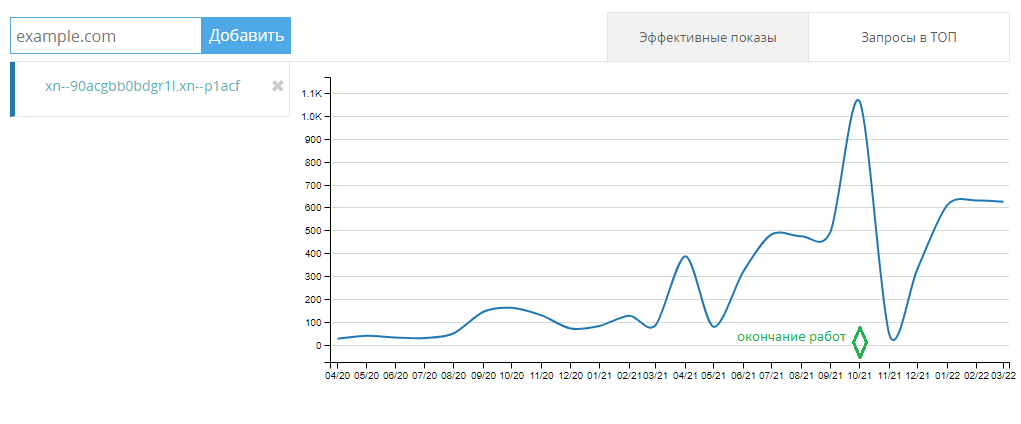 Explore the chart