Prime Lashes · Ecommerce SEO
Ecommerce SEO for a lash supplies store
Ecommerce SEO for Prime Lashes: product categories, variants and technical improvements. 92% of tracked keywords reached the top 10 and 42% the top 3.
- Services
- Ecommerce SEO
- Region
- Krasnodar
- Project period
- 18 months
The brief
Increase Prime Lashes’ visibility for professional lash supply searches and help lash technicians identify and reorder the right materials.
Results at a glance
- Keywords in the top 10
- 92%
- Keywords in the top 3
- 42%
- Traffic and conversions
- Increased
Share of tracked keywords
Share of tracked keywords
Growth recorded in the project portfolio
- Project period
- 18 months
- Region
- Krasnodar
- Ranking snapshot
Prime Lashes
The challenge
The store served professional buyers who often arrived with a precise product requirement rather than a broad interest in beauty. A lash artist could search by material type, brand or a combination of technical attributes. The catalogue needed to reflect that way of choosing while keeping variants and related supplies understandable. We focused the project on matching product searches to useful categories and clear product information, so a visitor could move from a detailed request to an available option without repeatedly starting the search again.
Where we started
We began by grouping commercial searches around the distinctions professionals used in their work. Product families were considered separately from variant attributes, which helped identify where a category page was useful and where a filter was enough. We then compared this map with the catalogue and the path to checkout. The first work focused on sections where structure, product naming and essential specifications could be made consistent together.
Problems we solved
Product buyers searched differently from salon customers
Before
Similar search phrases could refer to buying supplies or booking lash extensions. The shop needed to attract technicians looking for products.
What we changed
We separated product intent from service intent and matched professional query groups to the relevant categories and product variants.
Variants needed a consistent comparison format
Before
A technician compared specific parameters, while a new buyer needed help understanding differences. Inconsistent descriptions made both tasks slower.
What we changed
We aligned product names and characteristics, clarified category roles and preserved a short route to familiar products for repeat orders.
What we did
Organised categories for professional lash supplies
We separated the main product families and clarified the role of brand and attribute pages. Lash materials, application supplies and supporting products received a more understandable relationship within the catalogue. Search groups were mapped to the appropriate level rather than sent indiscriminately to individual items. This made the structure easier to extend and gave buyers a useful starting point whether they searched broadly or already knew the required specification.
Made product variants easier to compare
We worked on consistent naming and presentation of the attributes that distinguished variants. Parameters such as curl, length, thickness or package format were kept close to the product choice instead of hidden in a general paragraph. Related variants were reviewed together to avoid conflicting descriptions. The page content helped the buyer verify the required option, while specialist usage details remained tied to the product information rather than generalised promises.
Optimised category pages for product searches
We expanded the useful information around category listings: the range available, the parameters used for selection and links to relevant product groups. Titles and headings reflected the actual contents of each page. We checked which filter combinations matched products people searched for and which merely repeated existing pages. Useful categories remained accessible from search without creating a separate page for every possible filter selection.
The catalogue supported both a first purchase and replenishment: explanatory content helped compare materials, while consistent parameters helped an experienced technician recognise the required variant.
Connected availability and checkout with the catalogue
We reviewed the route from a category to a selected variant and then to the order. Availability and delivery information were considered part of the product decision, particularly for buyers planning their next working appointments. Mobile presentation and internal links were checked across the key templates. Search observations then helped select pages for further refinement, keeping catalogue development connected to the queries that brought professional customers to the store.
Key decisions
The challenge was the number of closely related product variants. A structure detailed enough for professional searches could also create duplicate pages and confusing repetition. We separated stable product categories from temporary filter selections and used consistent attributes to explain genuine differences. This kept the catalogue specific without relying on a new page for every possible combination. It also made later content updates more manageable, because related items followed the same information logic while retaining the details that mattered to the buyer.
What changed
The catalogue followed the way lash professionals searched for and selected supplies. Categories helped buyers find the right product type, while product pages explained the differences between variants. Clear availability and ordering information helped customers move from comparison to purchase.
Results in detail
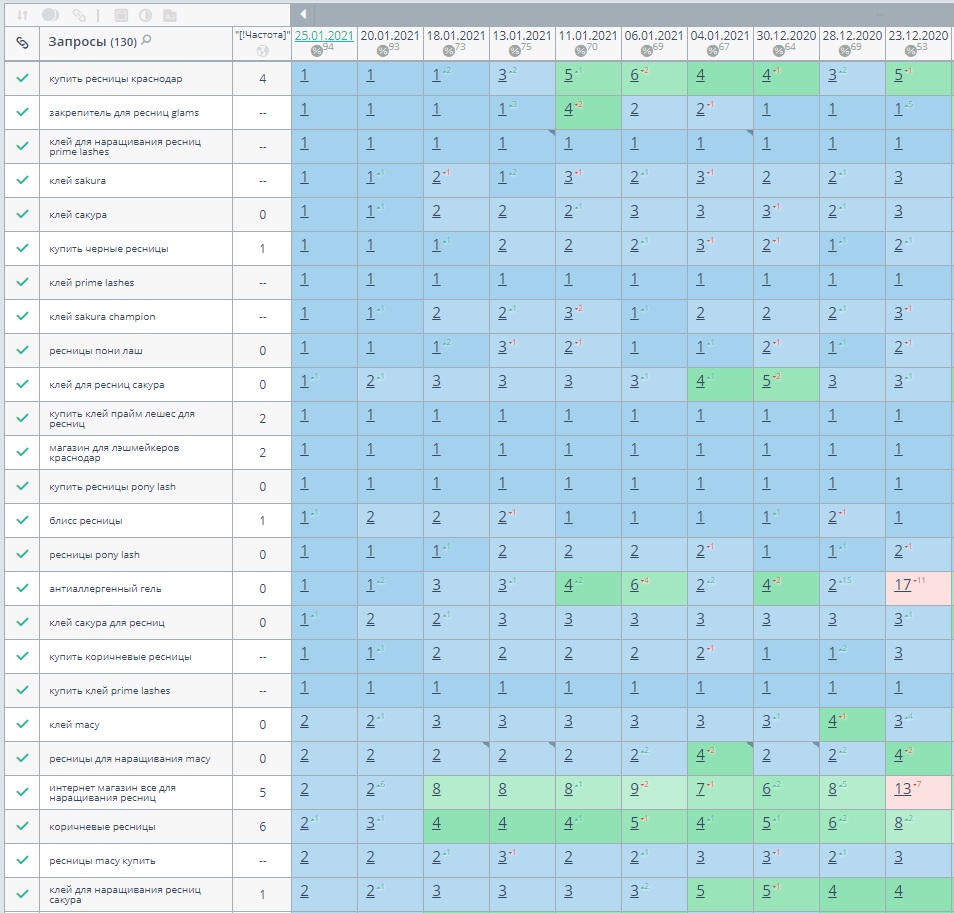
Search rankings
Snapshot: 2021-01-25. The report tracks 130 queries.
View all observations
| Date | Position |
|---|---|
| 5 | |
| 3 | |
| 4 | |
| 4 | |
| 6 | |
| 5 | |
| 3 | |
| 1 | |
| 1 | |
| 1 |
 Explore the original report
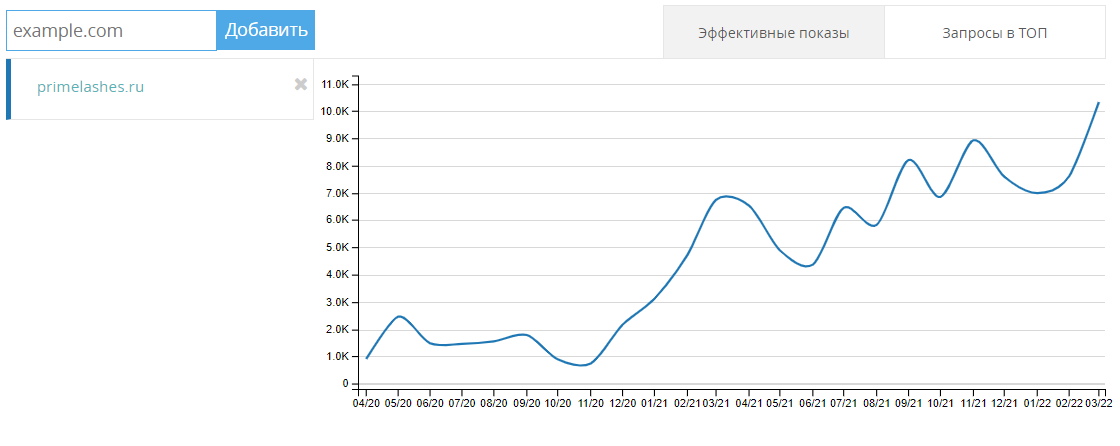
 Search performance
Effective impressions · Prime Lashes
04.2020 — 03.2022
 Explore the chart